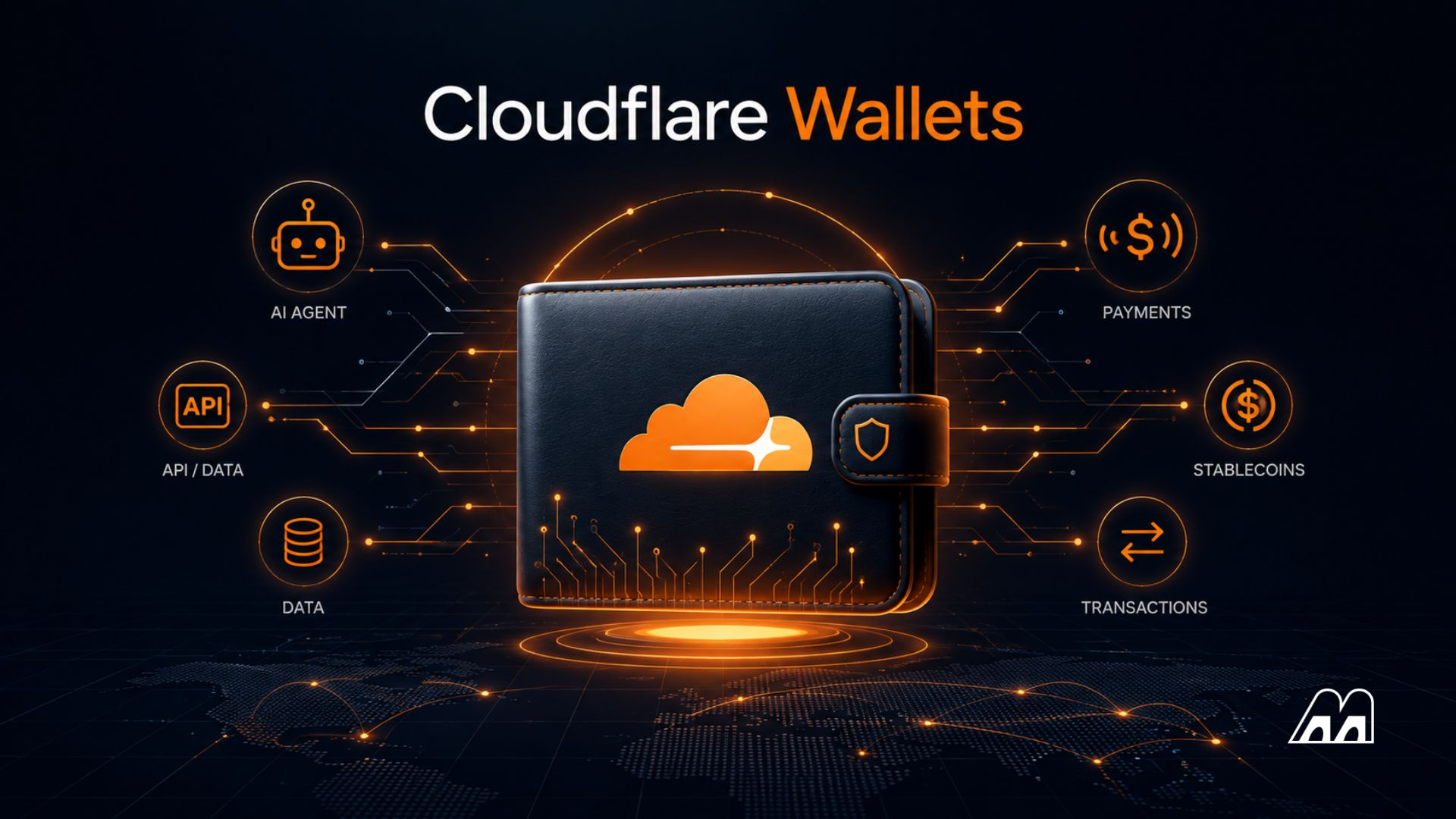
Cloudflare wants to give AI agents something they currently lack: a wallet built for machines.
The company announced Cloudflare Wallets on 4 August 2026. The upcoming service will let autonomous AI agents pay for APIs, online content and software tools using stablecoins, while humans retain control over how much those agents can spend.
You can already claim a unique Cloudflare Wallet handle. However, the full ability to fund the wallet, delegate money to agents and make payments is still coming later.
That distinction matters. Cloudflare has announced the infrastructure, but it hasn’t launched a finished consumer crypto wallet that you can start spending from today.
Cloudflare is building the buyer side of the agentic Internet
AI agents can already search websites, generate code and call external software. Paying for those services remains much harder.
Most online payment and registration systems were designed for humans. They expect someone to complete a form, enter card details, verify an email address and manually create an API key.
An autonomous agent normally can’t complete that entire process by itself. It also lacks a persistent identity that a merchant can recognise across different services.
Cloudflare Wallets aims to remove those barriers. An agent could discover a useful API, make a small payment, test the service and decide whether it meets the user’s needs.
This fits into the broader shift towards agentic AI and blockchain payments, where machines pay other machines for computing power, data or digital services.
The important part isn’t simply that an AI can hold money. It’s that the payment can become part of the software request itself.
Account Wallets keep humans in control
Cloudflare plans to offer two wallet types.
Account Wallets will belong to human Cloudflare users or organisations. The owner will be able to add funds, withdraw funds and decide how much spending authority to give an AI agent.
Virtual Wallets will operate through API keys and sit underneath an Account Wallet. Each AI agent can receive its own Virtual Wallet with specific permissions.
Owners will be able to configure controls such as:
- A total or recurring spending allowance
- A list of approved services or merchants
- A maximum amount per transaction
- A manual override process for exceptional purchases
Cloudflare gives the example of allocating each employee a weekly AI inference budget. Employees or their agents could spend within that limit, while larger requests would need human approval.
These controls resemble the spending caps appearing across other AI-compatible payment systems. The agent receives enough freedom to complete useful work, but it never gets unlimited access to the owner’s money.
That separation is essential. An incorrect prompt, compromised tool or poorly configured agent should not be able to drain an organisation’s full account.
x402 turns an HTTP request into a payment
Cloudflare Wallets will use x402, an open payment protocol based on the HTTP 402 “Payment Required” status code.
Under this model, an agent requests access to an API or piece of content. The server responds with a price. The agent pays in stablecoins and resends the request with proof of payment.
Cloudflare says these payments could cover AI inference, datasets, articles, MCP tools and other digital resources.
This works alongside Cloudflare’s Monetization Gateway, which is being developed for the seller side of the market. Website owners will be able to place APIs, datasets or content behind a payment layer without building a separate stablecoin payment system.
Together, the two products create a basic machine marketplace. Monetization Gateway helps websites charge, while Cloudflare Wallets gives agents a controlled way to pay.
It also extends Cloudflare’s wider push to make AI access permissioned and paid, rather than allowing automated systems to consume every online resource for free.
Wallet handles give agents a persistent identity
Payments solve only half the problem. Merchants also need to know whether they’re dealing with the same agent twice.
Cloudflare users can now claim a human-readable handle through cloudflare.pay. An organisation could eventually give its research agent an address such as research.company.cloudflare.pay.
The identifier can link an agent to a Cloudflare account and its cryptographic credentials. Declaring that identity will be optional, while merchants can decide whether to prioritise or offer benefits to recognised agents.
This complements new systems for identifying and authorising AI agents. Instead of treating every bot as anonymous traffic, websites could distinguish between an unknown crawler and a verified agent acting for a real organisation.
What this means for South African developers
For South African developers, the immediate opportunity sits in APIs and digital services rather than everyday retail payments.
A local software company could eventually sell access to a specialised dataset, translation service or business tool without creating separate accounts and card billing flows for every AI customer. Its own agents could also compare paid services and purchase small amounts of computing or data automatically.
However, Cloudflare hasn’t yet published a complete list of supported countries or confirmed when South African accounts will be able to fund and withdraw from Wallets. It says initial on-ramp and off-ramp options will be limited to supported geographies, with direct stablecoin funding available to eligible users.
We think the bigger story is that Cloudflare is turning its network into more than infrastructure for delivering websites. It wants to sit between agents and merchants when identity, permission and payment are checked.